The Complete Guide to Washington DC Airport Shuttles & Group Ground Transfers
Operational logistics, terminal commercial curb protocols, luggage capacity sizing, and verified regional dispatchers across Ronald Reagan National (DCA), Washington Dulles (IAD), and Baltimore/Washington (BWI).
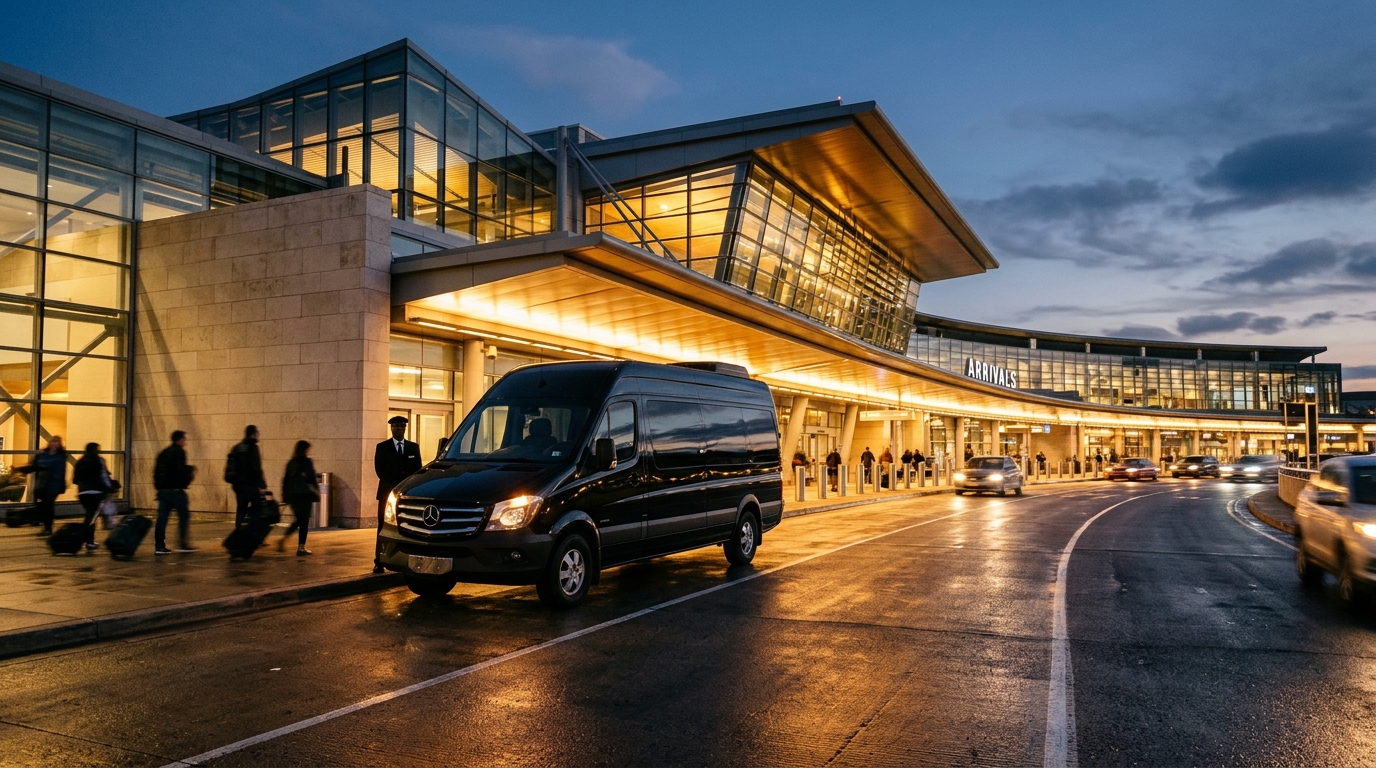
Navigating the National Capital Tri-Airport Transit Grid
Coordinating airport ground transportation for groups traveling into the Washington, DC metropolitan area involves navigating three distinct commercial aviation hubs. Each airport operates under unique municipal authorities, highway access corridors, and terminal roadway regulations:
- Ronald Reagan Washington National Airport (DCA): Located just 4 miles south of downtown Washington in Arlington, Virginia. Managed by the Metropolitan Washington Airports Authority (MWAA). DCA serves high-frequency domestic airline shuttles along the Northeast Corridor and key national business routes.
- Washington Dulles International Airport (IAD): Located 27 miles west of the District in Loudoun and Fairfax Counties, Virginia. Also managed by MWAA, Dulles is the primary international long-haul gateway serving diplomatic delegations, embassy staff, transpacific/transatlantic flights, and the Dulles Technology Corridor.
- Baltimore/Washington International Thurgood Marshall Airport (BWI): Located 32 miles northeast of the District in Anne Arundel County, Maryland. Managed by the Maryland Department of Transportation Maryland Aviation Administration (MDOT MAA). BWI is a central domestic low-cost carrier hub, charter terminal, and regional cruise passenger connector.
For corporate meeting planners, university athletic directors, and diplomatic protocol teams, selecting the right vehicle category and understanding terminal staging protocols is vital to preventing curb congestion, excessive waiting fees, and luggage overflow.
Terminal Staging & Commercial Loading Lane Rules by Airport
Airport authorities enforce strict dwell-time limits on active passenger pickup lanes. Motorcoaches, minicoaches, and executive Sprinters are prohibited from idling on arrivals curbs without their passenger party present. Professional dispatchers utilize off-terminal staging yards, moving to the curb only when the flight manifest clears baggage claim.
Terminal 1 & 2 Commercial Curbs
Loading occurs on the outer commercial roadway outside Terminal 1 and the lower baggage level commercial bays at Terminal 2. Chauffeurs stage in the North Commercial Holding Area until group contact is established.
Lower Arrivals Doors 2 & 4
Sprinters and private charters load from the inner commercial lanes outside lower baggage claim Doors 2 & 4. Full-size motorcoaches stage in the designated MWAA commercial bus staging lot adjacent to arrivals.
Lower Level Outer Roadway
Commercial passenger pickups take place on the lower level outer curb roadway between Concourses A and E. Private charter buses stage in the BWI Cell Phone / Commercial Holding Lot off MD-170.
When booking private airport ground transport, always verify whether your reservation includes curbside dispatch (where passengers walk directly out to assigned commercial bays upon receiving chauffeur SMS) or an inside terminal meet & greet (where a uniformed chauffeur parks, meets arriving guests inside baggage claim holding a printed name placard, and assists with luggage carts).
Vehicle Fleet Sizing: Balancing Passenger Headcounts and Checked Luggage
The most frequent error in airport transportation planning is calculating capacity solely by passenger seats without auditing luggage volumes. Unlike city shuttle loops or dinner shuttles, airport transfers require dedicated cubic footage for full-size rolling bags and carry-ons.
| Vehicle Tier | Seated Capacity | Luggage Compartment | Recommended Group Profiles |
|---|---|---|---|
| Executive Sprinter | Up to 14 Pax | 14 Checked + 14 Carry-on | Executive leadership, family travel, visiting diplomats |
| Mid-Size Minicoach | 24 to 38 Pax | 30–38 Checked Bags | Conference attendee waves, flight crew rotations, university teams |
| Touring Motorcoach | Up to 56 Pax | 56+ Underfloor Bags | Full international flight manifests, trade shows, government delegations |
For small executive parties of up to 14 passengers traveling with full international luggage sets, reserving a custom van with an isolated luggage partition is essential. In Washington, corporate organizers frequently reserve dedicated executive vans through DC Sprinter Rentals, which configures high-roof Mercedes-Benz Sprinters specifically built with high-capacity rear bulkheads to protect cabin comfort.
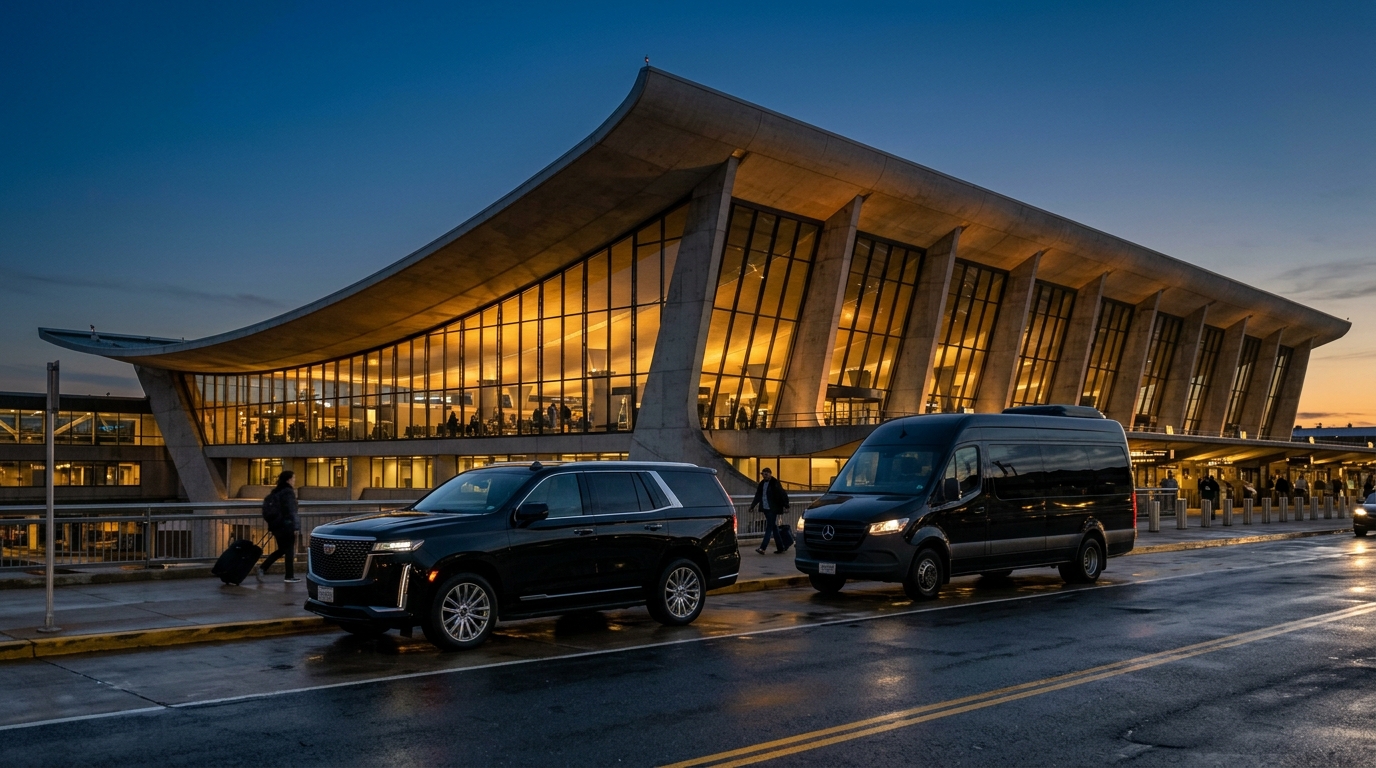
Highway Corridors: Why the Dulles Access Road Changes Transfer Math
Traffic across the Washington metropolitan area is notoriously congested, particularly across the Potomac River bridges and the Capital Beltway (I-495). Understanding which highway corridor your shuttle operates on allows planners to schedule realistic transfer timetables:
- The Dulles Access Road (Route 267) Advantage: Built in the center of the Dulles Toll Road, this dedicated four-lane expressway is restricted exclusively to airport-related traffic traveling to or from IAD. Commuter vehicles without airport business are subject to law enforcement citations. By bypassing regional toll lanes and commuter bottlenecks between the airport and I-66, charter vehicles enjoy consistent, predictable transit windows into Washington DC, Rosslyn, and Tysons.
- George Washington Memorial Parkway (DCA Corridor): Direct access between DCA and downtown Washington utilizes the scenic GW Parkway and the 14th Street Bridge or Memorial Bridge, keeping transfers under 25 minutes during off-peak hours.
- Baltimore–Washington Parkway & I-95 (BWI Corridor): Group transfers between BWI and downtown DC utilize either MD-295 (commercial vehicles must note commercial vehicle parkway restrictions and utilize I-95 South / Route 1) or I-95 to the Baltimore–Washington express connector, averaging 50 to 65 minutes depending on afternoon rush hours.
For corporate roadshows and international arrivals traveling specifically through the IAD corridor, dedicated transfer coordination is available via Dulles Airport Transfer, which provides real-time telemetry tracking and staging across Northern Virginia corporate campuses and downtown hotel properties.
Inter-Airport Shuttles: Layover Windows & Multi-Hub Routing
A common challenge for national associations and international tour operators is handling flight splits—where attendees arrive across different regional airports, or where connecting itineraries require changing airports across the DMV:
Connects international long-haul arrivals at Dulles with high-frequency domestic departures at Reagan National. Recommended layover buffer: minimum 3.0 hours between scheduled landing and outbound departure.
Cross-corridor connection crossing the American Legion Bridge on the Capital Beltway into Maryland. Recommended layover buffer: minimum 3.5 to 4.0 hours to accommodate peak Beltway delays.
Interstate corridor transit linking downtown Arlington/DC with central Maryland. Recommended layover buffer: minimum 3.0 hours.
When managing complex multi-airport flight schedules or coordinating group manifests that land at both DCA and BWI on the same morning, planners can model fleet options, calculate rates, and centralize dispatch through Capital Airport Shuttle, which coordinates unified transfers across all three major regional hubs.
Flight Buffers, Gate Tracking & Airport Authority Compliance
Modern airport ground transit relies on automated airline and FAA telemetry rather than static scheduled pickup times. Professional dispatchers link every charter reservation to the specific flight tail number (such as UA 919, BA 217, or AA 1842). Staging times automatically adjust for:
- Domestic Arrivals: A standard 45-minute complimentary wait buffer begins upon confirmed wheel-stop / gate touchdown, allowing ample time for taxiing, deplaning, and baggage belt retrieval.
- International Arrivals (IAD & BWI): A 60 to 75-minute buffer is provided to account for U.S. Customs and Border Protection processing, baggage clearance, and international arrivals hall re-entry.
- Early Touchdowns & Holding Patterns: Dispatch monitors airborne telemetry. If an inbound flight lands 25 minutes early or encounters weather holds over Pennsylvania, staging times are adjusted dynamically without requiring phone calls from passengers mid-flight.
2026 Washington DC Airport Group Transfer Rate Benchmarks
The following table provides current regional baseline rate benchmarks for private, dedicated airport transfers to and from Downtown Washington, DC. Actual pricing varies based on exact destination address, time of day, and special meet-and-greet requirements:
| Airport Hub | Distance to DC | Executive Sprinter (14 Pax) | Executive Minicoach (32 Pax) | Touring Motorcoach (56 Pax) |
|---|---|---|---|---|
| Reagan National (DCA) | 4 Miles | $215 – $265 | $390 – $475 | $585 – $710 |
| Washington Dulles (IAD) | 27 Miles | $285 – $345 | $465 – $560 | $675 – $840 |
| Baltimore/Washington (BWI) | 32 Miles | $310 – $375 | $495 – $595 | $710 – $890 |
*Rates reflect flat one-way group transfers including standard airport authority staging fees. Hourly minimums may apply for multi-stop campus tours or roadshows.
Frequently Asked Questions: DC Airport Group Transportation
How far in advance should we reserve airport charter buses during DC convention season?
During peak spring (March–June) and autumn (September–November) conference seasons at the Walter E. Washington Convention Center, commercial fleet availability becomes constrained. Group planners should secure motorcoaches and minicoaches 4 to 8 weeks in advance of major arrivals.
Can our charter bus make multiple hotel stops in Washington DC?
Yes. For delegations distributed across multiple properties (such as downtown K Street, Dupont Circle, and Capitol Hill), multi-stop routing can be coordinated in advance. Dispatchers schedule hotel stops in sequence to optimize traffic flow and prevent luggage misplacement.
What happens if our international flight is diverted or significantly delayed?
Because private charters link directly to airline flight numbers, dispatchers track diverted aircraft or rescheduled arrival slots in real time. If an inbound flight is delayed past midnight, after-hours dispatchers reassign staging times automatically.
Planning Group Transportation Across the National Capital Region?
BusFirms.com catalogs verified commercial motorcoach operators, municipal airport shuttle services, and executive fleet providers across Washington DC, Virginia, and Maryland. For specialized Dulles corridor transfers, visit Dulles Airport Transfer, or coordinate multi-airport regional group shuttles via Capital Airport Shuttle.